Background information
History
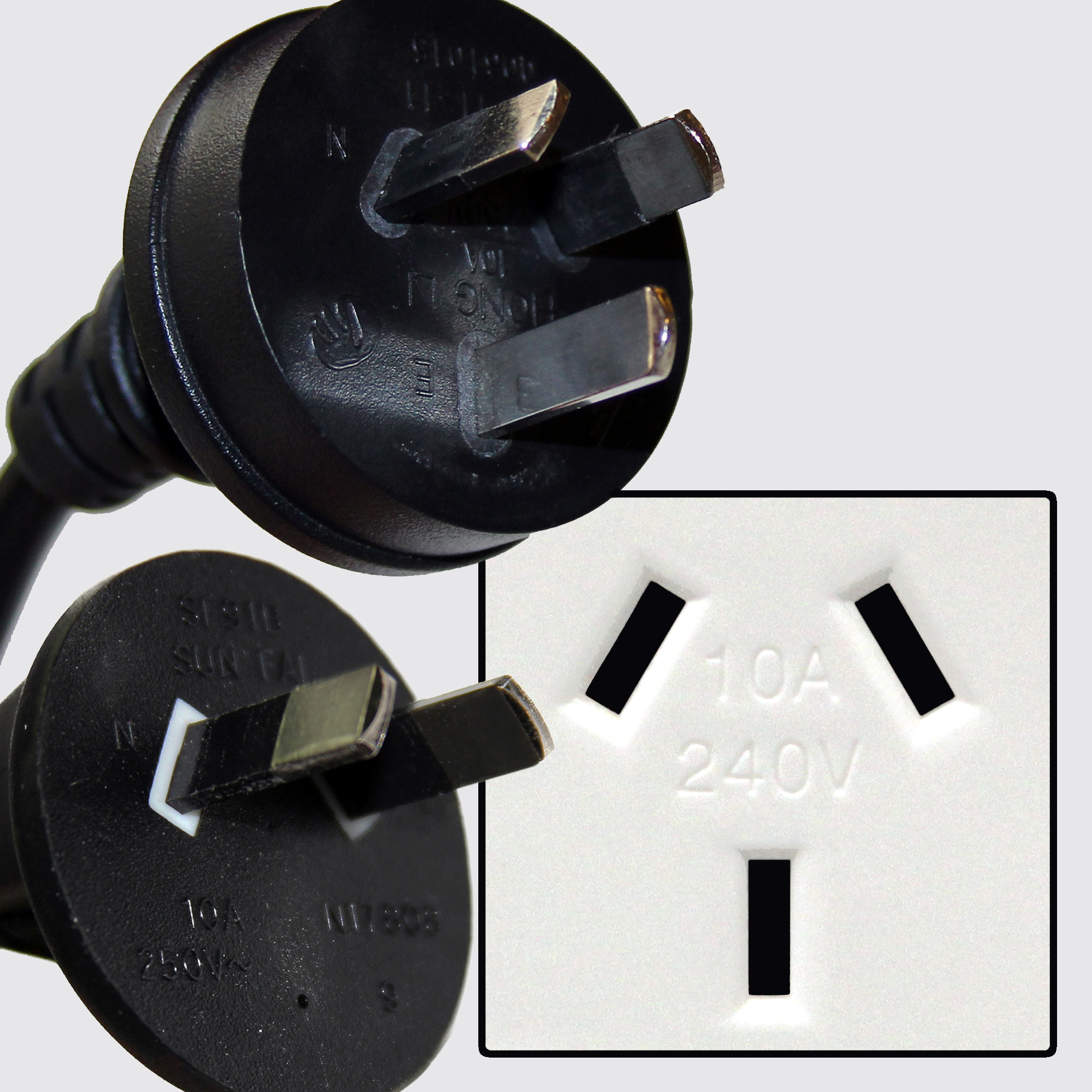
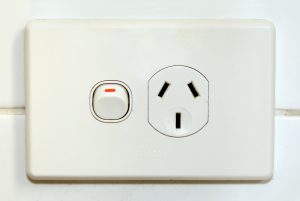
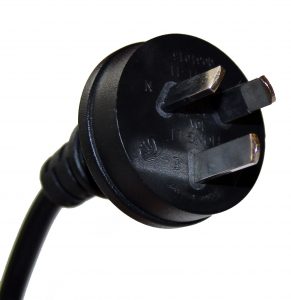
 The Type I plug is the standard in Australia and is also commonly used in New Zealand, Papua New Guinea, China, and Argentina. (Click here for the full list of all countries that use type I)
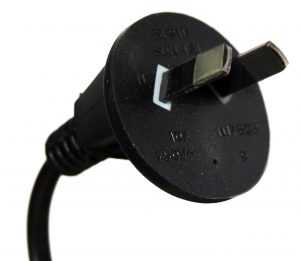
The regular 10-amp plug has two flat pins arranged in a V-shape and a third flat grounding pin. The pins are angled slightly and spaced to fit snugly into the socket. There’s also a version without the grounding pin, which just has the two V-shaped prongs. Both types are designed with safety in mind: the pins are partially insulated so you won’t get a shock if the plug isn’t fully inserted.
For heavier appliances, there are 15-amp and 20-amp versions. These look similar but have a wider ground pin. A smaller plug will fit into a higher-rated socket, but not the other way around. This system is standardized under AS 3112. Interestingly, the Australian plug also works in China, even though there are slight differences in pin length and socket orientation.
The reason as to why the dimensions of the Australian type I are very similar to those of type A is because the Australasian standard actually has American roots. It was patented in 1916 by Harvey Hubbell II, the same inventor behind the Type A plug. While Hubbell’s three-pin design never caught on in the U.S., Australia adopted it because flat pins were easier to manufacture than the round pins used in the British type D plugs. In the 1930s, the predominant Australian electrical accessory manufacturers, along with the State Electricity Commission of Victoria, decided to standardize on Hubbell’s design and many neighbouring countries followed Australia's lead.
Click here for a global map showing the spread of the different plug types used around the world.
Click here for a detailed list of the countries of the world with their respective plug and outlet types, voltage and frequency.



 The Type I plug is the standard in Australia and is also commonly used in New Zealand, Papua New Guinea, China, and Argentina. (Click
  For heavier appliances, there are 15-amp and 20-amp versions. These look similar but have a wider ground pin. A smaller plug will fit into a higher-rated socket, but not the other way around. This system is standardized under AS 3112. Interestingly, the Australian plug also works in China, even though there are slight differences in pin length and socket orientation.