
CHAdeMO
The CHAdeMO connector is a DC fast-charging standard, primarily used in electric cars in Japan. (Click here for the full list of all countries and the charging connectors they use)
Last updated: 25 January 2026
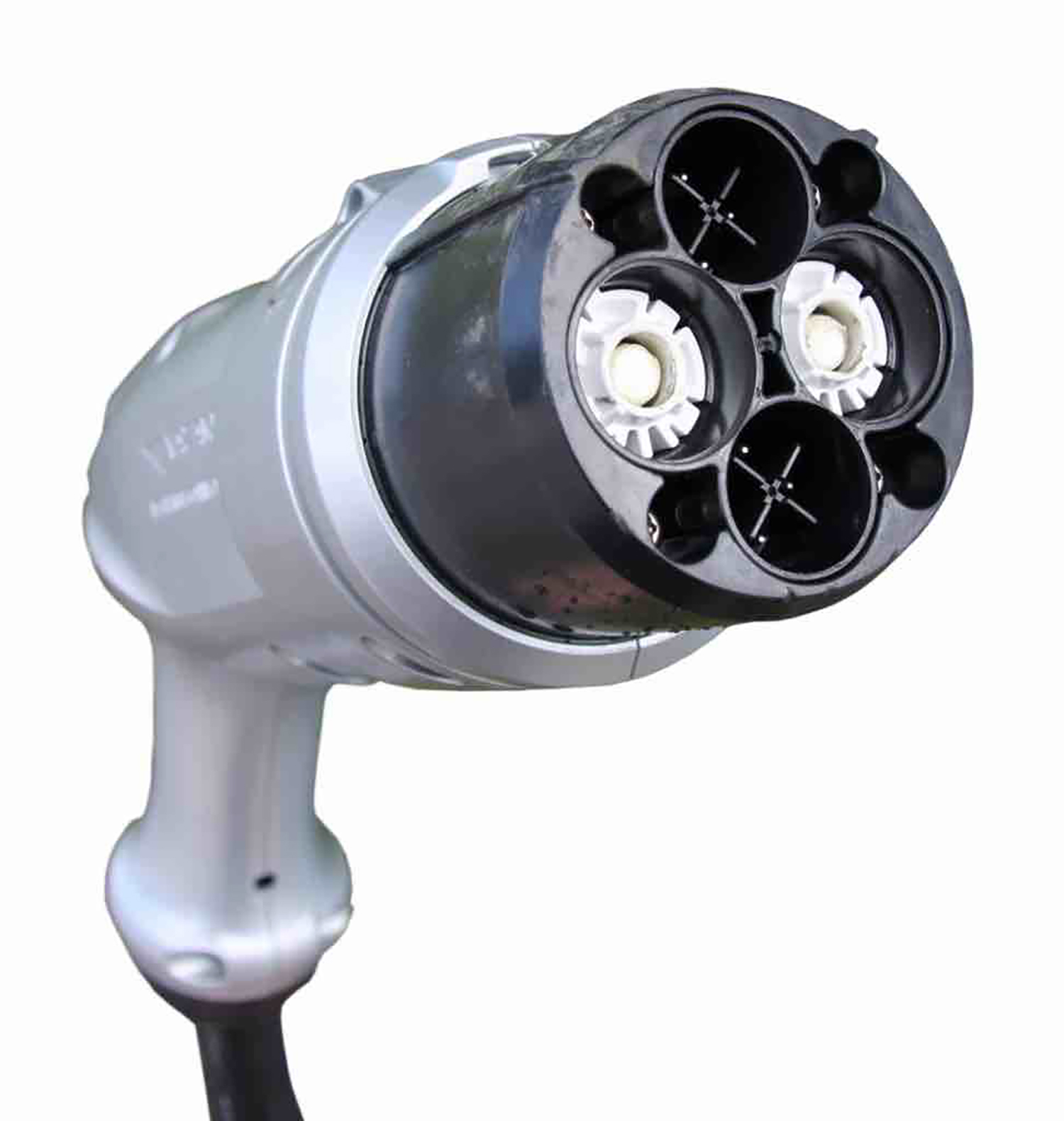
The CHAdeMO connector is a DC fast-charging standard, primarily used in electric cars in Japan. (Click here for the full list of all countries and the charging connectors they use)
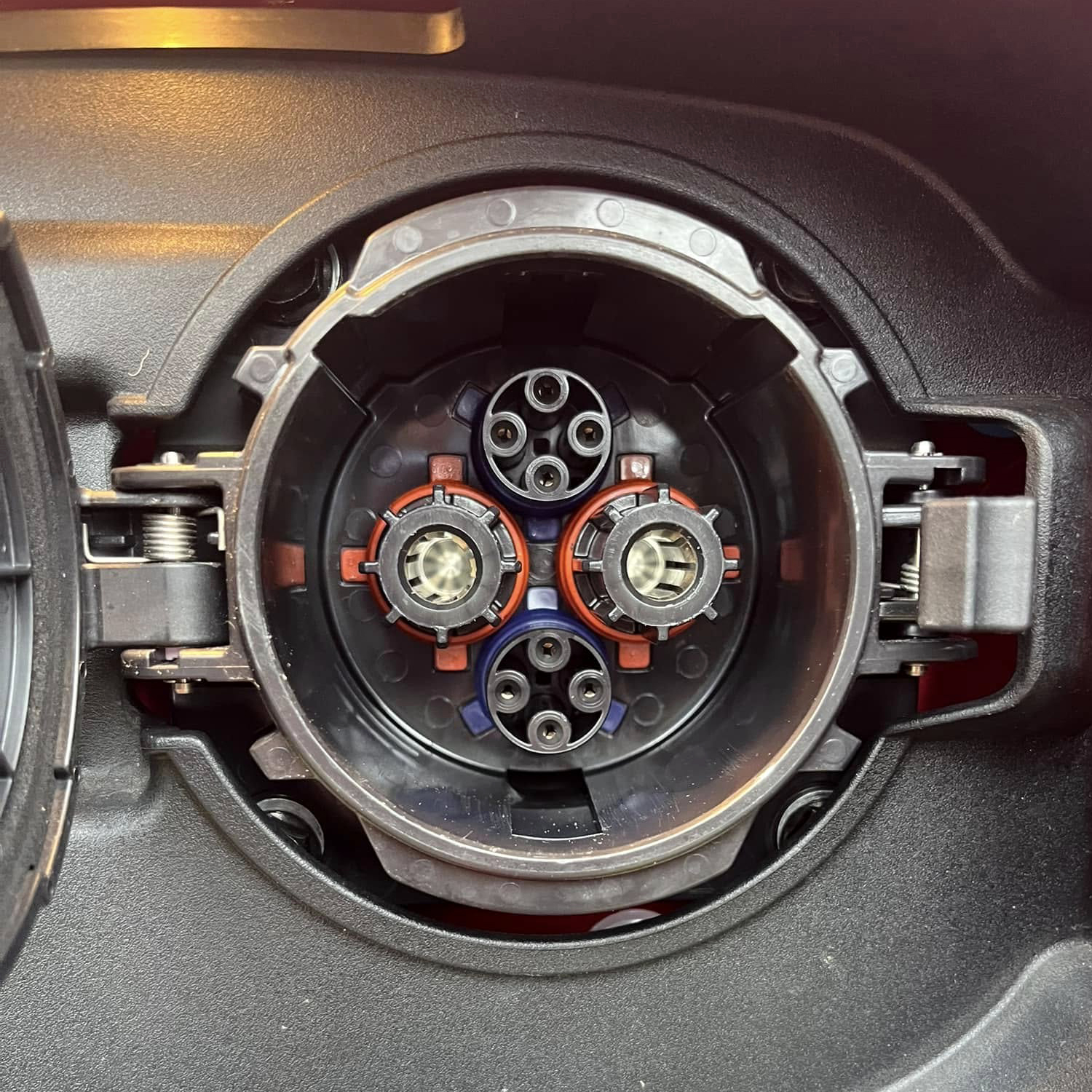
The CHAdeMO charging system was initially developed by Japanese automakers and released before CCS. The name is an abbreviation of “CHArge de MOve” (translated by the organization as “charge for moving”) and comes from the Japanese phrase “o CHA deMO ikaga desuka” (お茶でもいかがですか), which means “How about a cup of tea?” in English—an allusion to the time it takes to charge a car.
CHAdeMO chargers can provide up to 400 amps and 1000 volts DC, delivering a maximum power output of 400 kW. For ultra-rapid charging, the CHAdeMO system requires liquid-cooled cables to avoid damage caused by overheating. Inside those cables there are circulation channels containing a liquid coolant that absorbs and dissipates heat. The liquid cooling process involves a closed-loop system in which the coolant travels back and forth between the connector and the cooling unit of the charger.
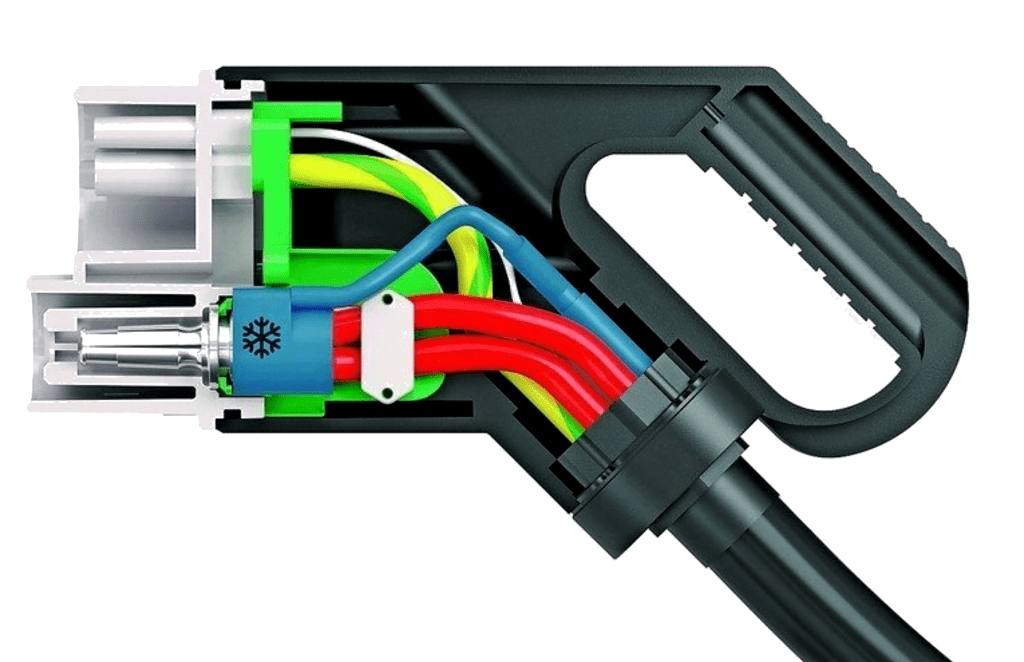
Inside liquid-cooled cables, circulation channels (highlighted in blue in the image) carry a liquid coolant that absorbs and removes the heat produced by the power conductors (highlighted in red in the image). This liquid-cooling approach relies on a closed-loop system in which the coolant continuously flows between the connector and the charger’s cooling unit.
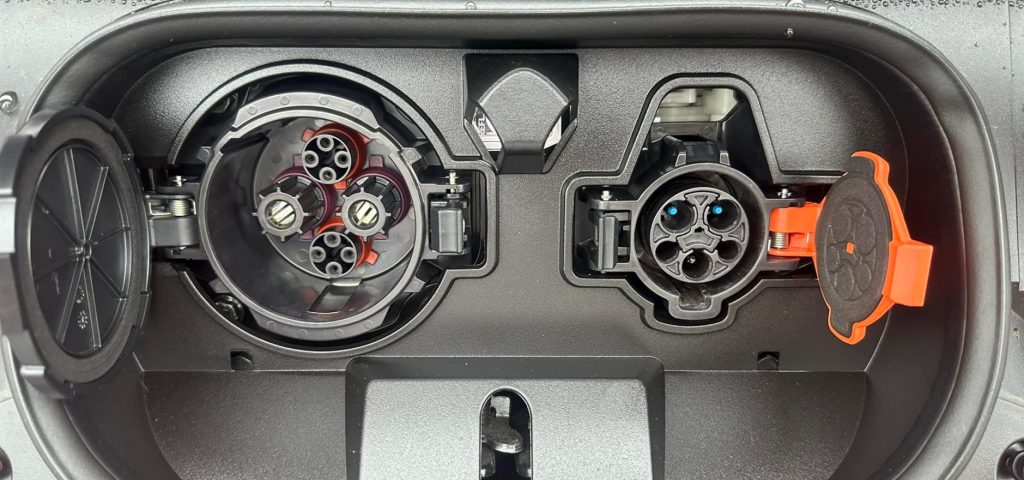
A Japanese car with a CHAdeMO charging port (left) and a Type 1 inlet (right)
CHAdeMO is designed specifically for direct current (DC) charging, which is faster than alternating current (AC) charging, because direct current can be delivered directly to the battery. AC is used in homes instead of DC, so with AC charging, the car’s onboard charger must first convert AC power to DC. The CHAdeMO system does not support AC charging, so a separate Type 1 charging port is required. As a result, cars that support CHAdeMO need to have two separate inlets.
The CHAdeMO connector was the first to widely support bidirectional charging, allowing EVs to send power back to the home, the grid, appliances or another vehicle, turning the car's battery into a backup power source.
A growing number of Japanese carmakers have begun phasing out CHAdeMO in favour of the North American Charging Standard (NACS) for all new models, signalling a major shift in the market. It is not impossible that Tesla’s proprietary connector will eventually become the sole Japanese standard.
