Last updated: 23 January 2026

North American Charging Standard (Tesla)

Tesla's proprietary EV charging plug (NACS) is primarily used in the United States, Canada, Mexico and Japan. (Click here for the full list of all countries that use the North American Charging Standard (Tesla))

Originally developed by Tesla, the North American Charging Standard (NACS) is a charging plug and inlet standard predominantly used in electric vehicles in North America, Central America, and Japan.

Tesla’s proprietary system was made available to all automakers in 2022 and has since been adopted by a growing number of car manufacturers as a replacement for Type 1/CCS 1 plugs.

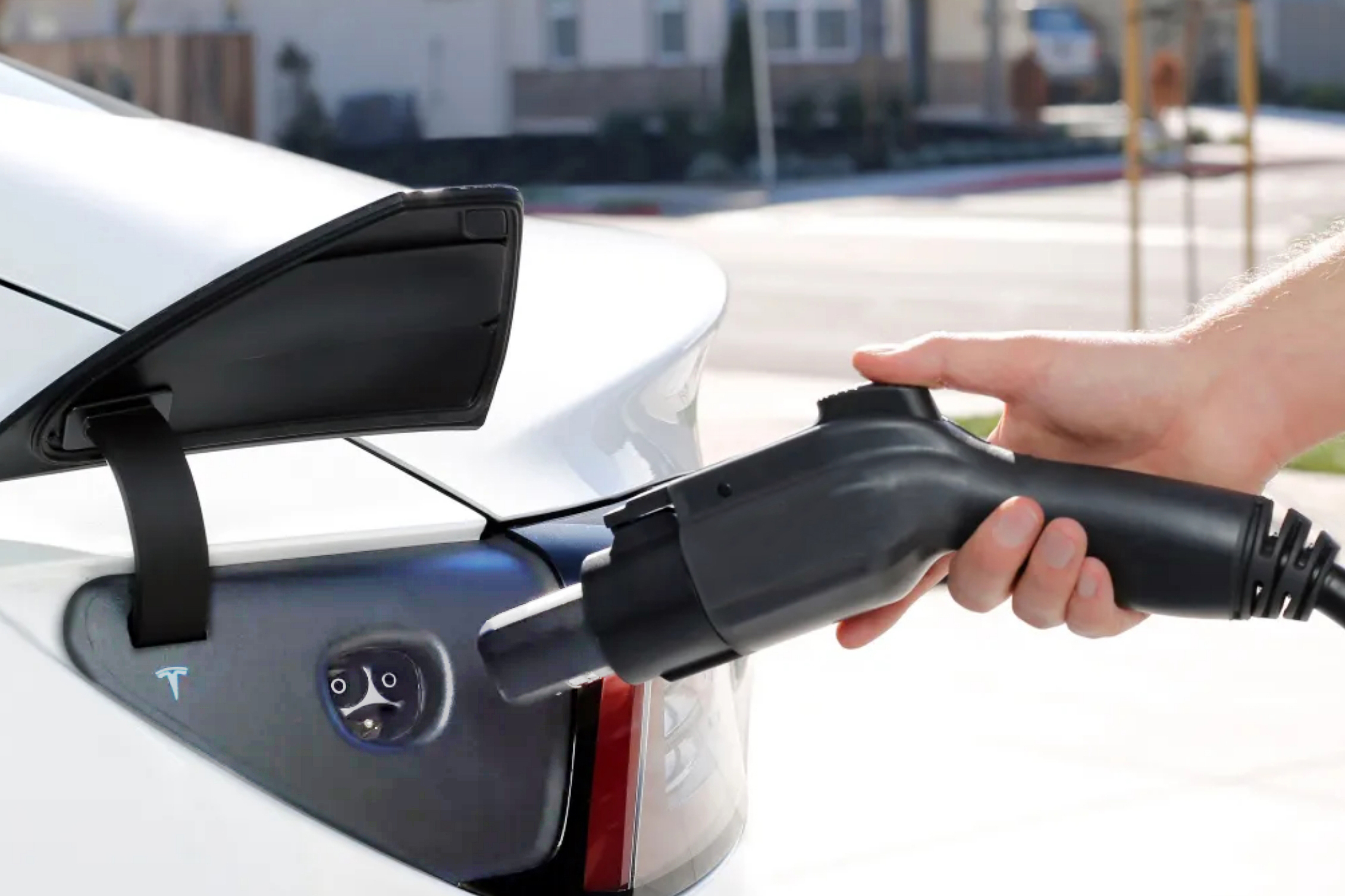
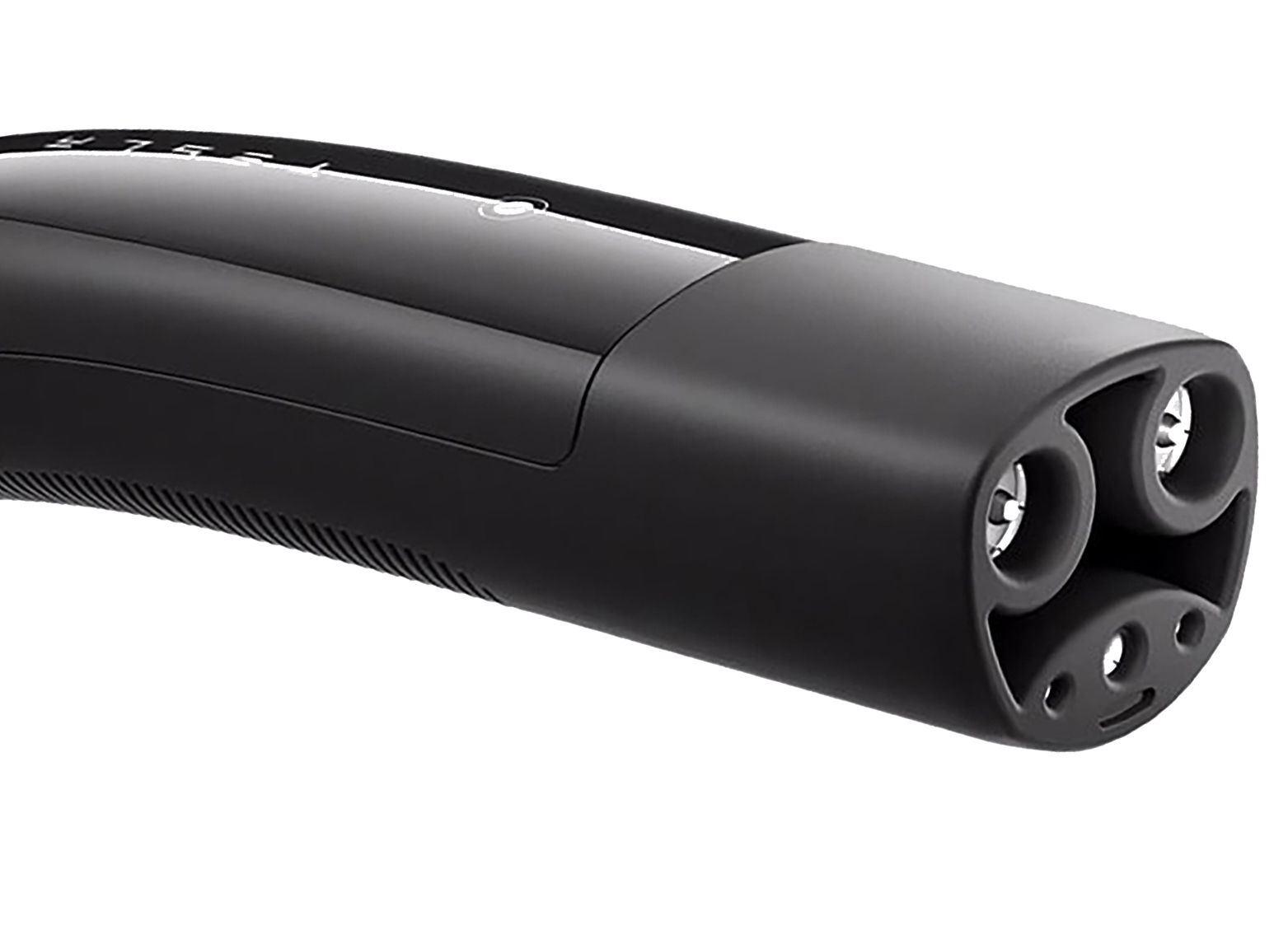
NACS has a unique design which uses the same two pins for both AC and DC charging, resulting in a plug that is more streamlined than the others. However, as only two main pins are shared between both AC and DC, three phase AC charging is not possible.

A person holding a NACS-to-CCS1 adapter, which lets EVs with CCS1 ports charge at Tesla Superchargers

While residential three-phase electric power is not common in North America, it is in Europe and many other parts of the world, so the NACS plug is unsuitable for use there and CCS 2 is used there instead. NACS supports AC charging up to 80 A (22.2 kW) and DC fast charging up to 1000 V and 1000 A, enabling power levels over 1000 kW.

The NACS connector supports bidirectional charging, allowing EVs to send power back to the home, the grid, appliances or another vehicle, turning the car’s battery into a backup power source.

With its compact and efficient design, NACS is expected to become the dominant charging standard across North and Central America in the near future.

Check out all electric vehicle connector types used around the world